Mastering the Hybrid Workflow: Antigravity Planning Meets Claude Execution for Elite AI Development
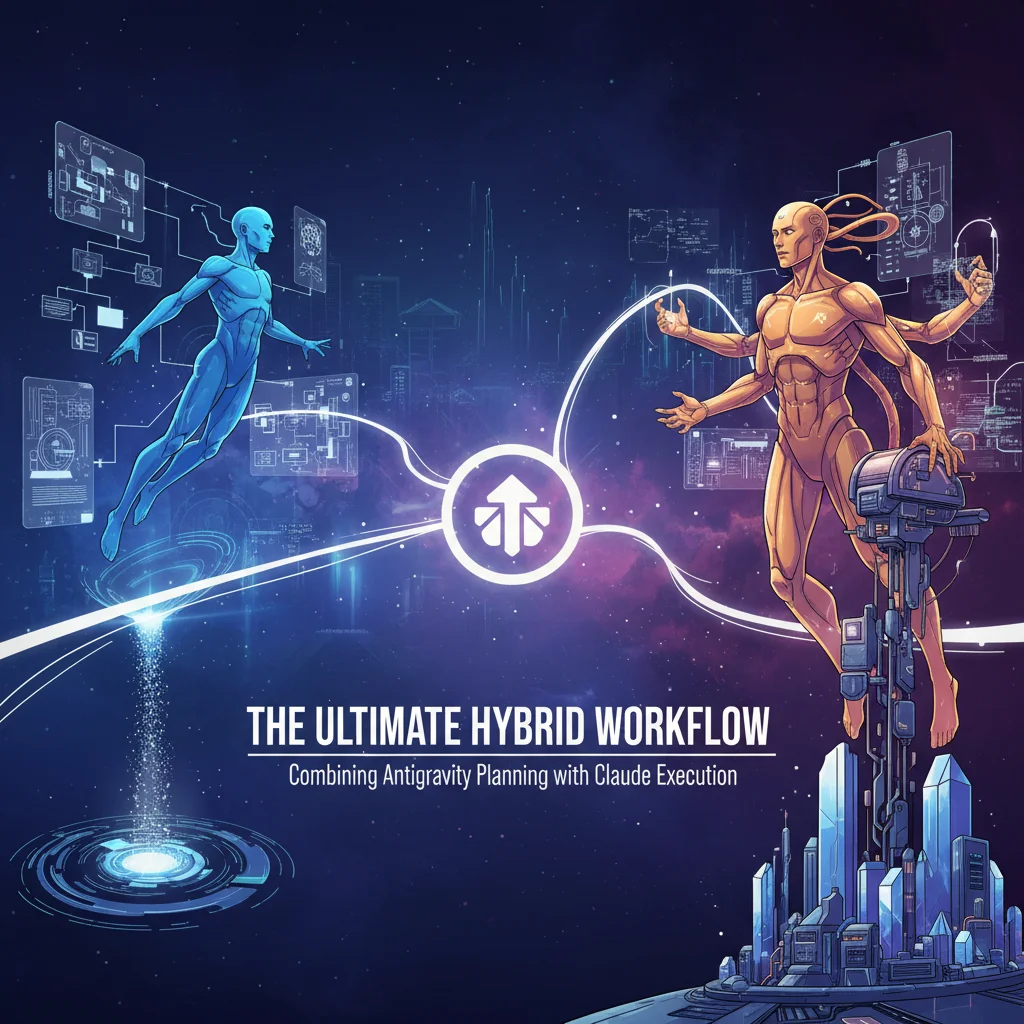
The Ultimate Hybrid Workflow: Combining Antigravity Planning with Claude Execution
The landscape of AI software development is undergoing a seismic shift. As generative AI models become more sophisticated, the traditional approaches to software engineering are rapidly being redefined. This evolution isn't just about faster coding; it's about a fundamental transformation in how we conceptualize, design, and implement complex AI systems.
In this new era, the challenge lies in harnessing the immense power of autonomous AI agents while maintaining strategic oversight and control. The answer lies in a synergistic approach: the ultimate hybrid workflow that pairs visionary planning with unparalleled execution. This article delves into how combining what we call Antigravity Planning – a strategic, future-proof design methodology – with Claude Execution, powered by advanced AI coding agents like Anthropic Claude, is revolutionizing AI development.
- Antigravity Planning is a visionary, strategic design approach for AI projects, emphasizing clarity, modularity, and future-proofing, exemplified by an ideal Google Antigravity IDE concept.
- Claude Execution leverages advanced AI coding agents like Anthropic Claude for autonomous code generation, debugging, and self-correction, turning complex plans into robust software.
- The Hybrid Workflow combines human strategic oversight (Antigravity Planning) with AI automation (Claude Execution) to accelerate development and enhance project success rates.
- This paradigm introduces the Model Context Protocol (MCP), a crucial framework for seamless communication and context sharing between human architects and AI agents.
- Embracing this workflow is essential for businesses seeking significant Digital Transformation and a competitive edge in the rapidly evolving AI-driven economy.
What You'll Learn
The Dawn of Antigravity Planning: Vision and Strategy
In the burgeoning world of AI, project failures often stem from a lack of foresight and strategic architecture. Developing complex AI systems demands more than just powerful models; it requires a robust planning framework that anticipates challenges and scales effortlessly. This is where the concept of Antigravity Planning emerges as a revolutionary methodology.
Antigravity Planning is not merely a set of tools; it's a philosophy. It champions clarity, modularity, and strategic foresight in AI project design, aiming to elevate projects above the gravitational pull of technical debt and unforeseen complexities. It ensures that the foundational architecture is solid, adaptable, and inherently future-proof.
The Vision of a Google Antigravity IDE
Imagine an integrated development environment (IDE) that doesn't just help you write code but helps you architect intelligence. The conceptual Google Antigravity IDE embodies this vision. It would serve as the central hub for Antigravity Planning, providing intuitive visual tools for high-level system design, dependency mapping, and modular component definition.
This IDE would allow developers and architects to define the core objectives, ethical guardrails, and desired behaviors of an AI system before a single line of functional code is written. It would incorporate advanced simulation capabilities, allowing for early validation of architectural decisions and potential integration points. The goal is to move beyond reactive coding to proactive, strategic system design.
Through its intelligent interface, the Antigravity IDE would help manage the lifecycle of autonomous AI agents. It would provide mechanisms for defining agent roles, communication protocols, and even their 'constitutional' constraints, much like Anthropic's own approach to Claude's safety. This proactive governance layer ensures that AI development remains aligned with human intent and ethical considerations.
Such an IDE would integrate seamlessly with version control, project management, and automated testing frameworks, providing a single source of truth for the entire AI project. It would also offer robust collaboration features, enabling distributed teams to contribute to the strategic planning phase in a unified environment. Agencies like Integradyn.ai recognize the critical importance of such strategic planning for successful digital transformation initiatives.
Antigravity Planning shifts the focus from reactive coding to proactive, strategic AI system design, emphasizing clarity, modularity, and future-proofing. A conceptual Google Antigravity IDE would be its central orchestrator.
Key Principles of Antigravity Planning
Several core principles underpin Antigravity Planning, making it an indispensable asset for modern AI Software Development. Firstly, Architectural Clarity is paramount. This involves defining clear, well-documented structures for AI models, data pipelines, and interaction layers.
Secondly, Modular Design ensures that AI components are loosely coupled and highly cohesive, allowing for independent development, testing, and scaling. This reduces the blast radius of failures and accelerates iteration cycles. Digital marketing experts at Integradyn.ai consistently advocate for modularity in complex projects to ensure agility and resilience.
Thirdly, Contextual Awareness means designing systems that can adapt to changing environments and user needs without extensive re-engineering. This principle is vital in generative AI, where model capabilities evolve rapidly. The planning phase must account for future model updates and integration complexities.
Finally, Ethical and Governance Design is baked into the planning process from the outset. This includes defining safety constraints, bias mitigation strategies, and accountability frameworks. It ensures AI systems are developed responsibly and align with societal values, a growing concern in the realm of AI automation and tech innovation.
The strategic approach of Antigravity Planning provides a robust blueprint, ensuring that even the most ambitious generative AI projects remain grounded in sound principles. It's the essential first step before embarking on the execution phase with powerful AI coding agents.
AI Development Approaches: Traditional vs. Antigravity Planning
Traditional Planning
Often ad-hoc, code-first approach. Focus on immediate features. High risk of technical debt and scope creep. Limited adaptability to new models or requirements. Reactive problem-solving.
Antigravity Planning
Strategic, architecture-first design. Emphasis on modularity, scalability, and future-proofing. Proactive ethical integration. Reduced long-term maintenance costs. Visionary approach.
Key Differences
Focus: Code vs. Architecture. Risk: High vs. Low. Adaptability: Low vs. High. Long-term Value: Limited vs. Sustained. Cost: Higher TCO vs. Lower TCO.
Claude Execution: The Powerhouse of Autonomous AI Agents
Once a robust Antigravity Plan is in place, the next step is execution, and this is where advanced AI coding agents truly shine. Anthropic's Claude, particularly with its latest iterations like Claude 4.5 or future versions, stands out as a leading contender in this domain. Its extensive capabilities make it an ideal engine for translating complex plans into functional, high-quality code.
Claude's strength lies in its profound understanding of natural language combined with its deep programming knowledge. This allows it to interpret sophisticated architectural specifications and produce code across various languages and frameworks. It goes beyond simple code generation, exhibiting multi-turn reasoning and self-correction, crucial for autonomous AI agents.
The Capabilities of Claude as an AI Coding Agent
Anthropic Claude offers a suite of features that are transforming AI Software Development. Its expansive context window enables it to hold vast amounts of information in memory, from architectural diagrams to intricate codebases. This allows for coherent, context-aware code generation and refactoring, minimizing inconsistencies.
Claude can engage in complex problem-solving dialogues, asking clarifying questions and suggesting alternative implementations based on the Antigravity Plan's constraints. Its ability to debug its own code, identify logical flaws, and even suggest performance optimizations makes it an invaluable partner. This level of autonomy significantly accelerates development cycles.
"The true power of AI in software development isn't just automation; it's augmentation. Tools like Claude empower developers to operate at a higher level of abstraction, focusing on strategic design while the AI handles the granular implementation. It's like having an entire team of highly skilled, tireless junior engineers at your command."
Compared to other models like Gemini 3 Pro, Claude's emphasis on safety and constitutional AI principles ensures its generated code adheres to predefined ethical guidelines. This aligns perfectly with the ethical governance aspect of Antigravity Planning. The synergy between planned ethics and executed ethics is paramount in today's AI landscape.
The Model Context Protocol (MCP): Bridging Vision and Execution
For the Antigravity Plan to seamlessly interface with Claude's execution capabilities, a standardized communication layer is essential. We envision the Model Context Protocol (MCP) as this critical bridge. MCP is a conceptual framework designed to enable robust and context-rich communication between human architects, Antigravity IDEs, and autonomous AI agents like Claude.
MCP would define structured data formats for conveying architectural specifications, project requirements, ethical constraints, and iteration feedback. It ensures that Claude receives a complete, unambiguous understanding of its tasks and the overarching project goals. This protocol would facilitate the continuous feedback loop inherent in the hybrid workflow.
When leveraging Claude for code generation, provide highly structured prompts that directly reference your Antigravity Plan's modular components and API specifications. Break down complex tasks into smaller, manageable units for optimal results and easier verification.
The adoption of MCP would standardize how AI coding agents consume and produce information, fostering interoperability across different tools and models. This is crucial for scaling AI automation efforts and building complex systems composed of multiple specialized agents. Integradyn.ai believes such protocols are vital for the future of programming, ensuring clarity and efficiency.
By leveraging Claude's generative capabilities within the MCP framework, developers can transform high-level designs into functional code with unprecedented speed and accuracy. The manual overhead of translating design documents into code is drastically reduced, allowing human engineers to focus on higher-value tasks such as innovation, strategic oversight, and complex problem-solving. This shift redefines the human-AI collaboration model.
Ready to Transform Your Business with AI?
Discover how a strategic hybrid AI workflow can revolutionize your development cycles and drive unparalleled growth. Let Integradyn.ai guide you.
Schedule Your Free ConsultationForging the Hybrid Workflow: Synergy in Action
The true power of this new paradigm emerges when Antigravity Planning and Claude Execution are seamlessly integrated. This hybrid workflow represents a shift from a purely human-driven or purely AI-driven development model to a highly collaborative, augmented intelligence approach. It leverages the strengths of both human creativity and AI efficiency.
This workflow isn't about replacing human engineers; it's about empowering them to achieve more, faster, and with higher quality. The human role evolves from direct coding to strategic architect, ethical guardian, and intelligent orchestrator. AI automation takes on the heavy lifting of implementation and iterative refinement.
The Iterative Loop: Plan, Execute, Review, Refine
The core of the hybrid workflow is a dynamic, iterative loop. It begins with the Antigravity Plan, which provides the high-level architecture, component definitions, and ethical guidelines. This plan is then fed to Claude via the Model Context Protocol (MCP).
Strategic Planning (Human + Antigravity IDE)
Architects and engineers define system goals, modular components, APIs, and ethical constraints within the Antigravity IDE. This creates a detailed, future-proof blueprint.
Automated Execution (Claude + MCP)
The Antigravity Plan, structured via MCP, is passed to Claude. Claude generates code, sets up environments, and performs initial testing based on the detailed specifications provided.
Human Review and Validation
Human engineers critically review Claude's output for correctness, adherence to the plan, performance, and security. They validate the generated components against the Antigravity specifications.
Iterative Refinement (Feedback to Claude)
Feedback from human review is channeled back to Claude, along with updated plan segments or new requirements. Claude then refines the code, tests, and suggests further improvements, restarting the execution phase.
Integration and Deployment
Once validated, code is integrated into the larger system. The Antigravity IDE and Claude can assist with continuous integration/continuous deployment (CI/CD) pipelines, monitoring, and ongoing maintenance.
This continuous feedback loop ensures that the human intellect maintains ultimate control and strategic direction, while the AI excels at rapid, high-volume, and precise implementation. It's a symphony of intent and execution, leading to unprecedented efficiency in AI Software Development.
The Role of Human Oversight and Intervention
Despite the rise of autonomous AI agents, human oversight remains paramount. Engineers transition from being primary coders to strategic architects, ethical reviewers, and system integrators. They are responsible for defining the initial Antigravity Plan, setting parameters for Claude's operations, and critically evaluating its outputs.
Human intervention is necessary for handling edge cases, making subjective design decisions, and ensuring the AI's outputs align with complex business objectives and user experience. The experts at Integradyn.ai emphasize that the 'human in the loop' is not merely a fallback but an active, intelligent partner, guiding the AI toward optimal solutions.
While powerful, over-reliance on AI coding agents without rigorous human review and validation can introduce subtle bugs, security vulnerabilities, or ethical misalignments. Always maintain a robust human oversight layer within your hybrid workflow.
This symbiotic relationship mitigates risks associated with purely autonomous AI and maximizes the creative potential of human developers. It allows for the rapid exploration of innovative solutions while maintaining a high standard of quality and ethical responsibility.
The Future of Programming and Digital Transformation
The convergence of Antigravity Planning and Claude Execution is not merely an optimization; it's a harbinger of the future of programming. This hybrid workflow heralds an era where the development of complex, intelligent systems becomes more accessible, efficient, and aligned with strategic business goals. The implications for industries undergoing digital transformation are profound.
We are moving towards a landscape where AI Software Development is less about writing boilerplate code and more about designing intelligent systems. The focus shifts to defining intent, architecting behavior, and managing the interactions between autonomous AI agents. This fundamentally redefines the role of software engineers, elevating them to higher-order problem-solvers.
AI Automation and Tech Innovation
The hybrid workflow dramatically accelerates the pace of tech innovation. By automating large segments of the coding and testing process, development teams can iterate faster, experiment with more ideas, and bring cutting-edge AI solutions to market in record time. This competitive advantage is crucial for businesses aiming to lead in their respective sectors.
This acceleration is especially critical in rapidly evolving fields like generative AI, where new models and techniques emerge constantly. The ability to quickly integrate new AI capabilities into existing systems, thanks to modular Antigravity Planning and efficient Claude Execution, ensures businesses remain at the forefront of technological advancement. According to the SEO specialists at Integradyn.ai, agility in adopting new technologies is a key differentiator in today's digital economy.
The Evolving Role of the IDE for AI
The conceptual Google Antigravity IDE, as described earlier, is a glimpse into the future of development environments. IDEs will no longer be mere text editors with debugging tools; they will become intelligent platforms for designing, simulating, orchestrating, and monitoring complex AI systems. They will be the control centers for fleets of autonomous AI agents.
These next-generation IDEs will integrate advanced visualization tools to help engineers understand intricate AI architectures, monitor agent interactions, and diagnose emergent behaviors. They will also incorporate sophisticated AI safety and ethical governance tools, ensuring that deployed systems remain within defined boundaries. This evolution marks a significant leap in how we interact with and manage intelligent systems.
Digital Transformation Accelerated
For service businesses and enterprises, adopting this hybrid workflow represents a significant leap in their digital transformation journey. It allows them to develop custom AI solutions faster, more reliably, and at a lower long-term cost. From automating customer service with advanced chatbots to optimizing internal operations with intelligent agents, the possibilities are endless.
Agencies like Integradyn.ai are at the forefront of guiding businesses through this transformation. By implementing strategic Antigravity Planning and integrating powerful AI coding agents like Claude, Integradyn.ai helps service businesses not just adopt AI but leverage it to redefine their market presence and operational efficiency. We enable them to build scalable, intelligent platforms that drive sustainable growth.
Ready to Build Your AI-Powered Future?
Partner with Integradyn.ai to implement a cutting-edge hybrid workflow that ensures your AI projects succeed. Explore our services and case studies today!
Explore Our AI SolutionsThe ultimate hybrid workflow is not just a theoretical concept; it's a practical, actionable strategy for navigating the complexities of modern AI development. It empowers human ingenuity with AI's execution prowess, paving the way for unprecedented innovation and transformative business outcomes. The future of programming is collaborative, intelligent, and strategically planned.
Frequently Asked Questions
Frequently Asked Questions
What is Antigravity Planning?
Antigravity Planning is a strategic design methodology for AI projects that focuses on creating clear, modular, and future-proof architectures. It emphasizes foresight, ethical considerations, and robust system design before coding begins, effectively lifting projects above common pitfalls.
How does Claude Execution differ from traditional coding?
Claude Execution utilizes advanced AI coding agents like Anthropic Claude to autonomously generate, debug, and refine code based on high-level strategic plans. Unlike traditional coding, which is manual, Claude provides multi-turn reasoning and self-correction, significantly accelerating the development process.
Is the Google Antigravity IDE a real product?
Currently, the Google Antigravity IDE is a conceptual vision. It represents the ideal integrated development environment that would enable Antigravity Planning principles – focusing on strategic design, simulation, and orchestration of AI projects, rather than just code editing.
What is the Model Context Protocol (MCP)?
The Model Context Protocol (MCP) is a conceptual framework designed to standardize communication and context sharing between human architects, strategic planning environments (like the Antigravity IDE), and autonomous AI agents (like Claude). It ensures AI agents receive unambiguous and complete project information.
How does the hybrid workflow improve AI software development?
The hybrid workflow combines human strategic oversight (Antigravity Planning) with AI automation (Claude Execution). This synergy leads to faster development cycles, reduced technical debt, enhanced code quality, integrated ethical design, and ultimately, more successful and scalable AI projects.
Do I still need human developers with this workflow?
Absolutely. Human developers evolve into strategic architects, ethical guardians, and system integrators. They define the Antigravity Plan, review AI-generated code, handle edge cases, and ensure alignment with complex business objectives. The workflow augments, not replaces, human expertise.
What are the benefits of modular design in AI projects?
Modular design, a core principle of Antigravity Planning, ensures AI components are independent and interchangeable. This leads to easier maintenance, faster updates, improved scalability, and a reduced risk of widespread failures, allowing for agile development and innovation.
How does this workflow address ethical concerns in AI?
Antigravity Planning integrates ethical and governance design from the outset, defining safety constraints and bias mitigation strategies. Claude's constitutional AI principles further ensure that execution adheres to these ethical guidelines, making responsible AI development an inherent part of the process.
Can this workflow be applied to small AI projects?
While the benefits scale with project complexity, the principles of strategic planning and automated execution can be adapted for projects of all sizes. Even smaller projects can benefit from clear planning and efficient code generation, leading to better outcomes and faster iterations.
What role does Integradyn.ai play in this hybrid workflow?
Integradyn.ai specializes in guiding businesses to implement this cutting-edge hybrid workflow. Our experts help with strategic Antigravity Planning, integrate powerful AI coding agents like Claude, and provide the oversight necessary to drive successful digital transformation and achieve sustainable growth.
How does Claude compare to other AI coding agents like Gemini 3 Pro?
While models like Gemini 3 Pro offer powerful coding capabilities, Claude often stands out for its strong emphasis on multi-turn reasoning, extensive context windows, and adherence to safety and constitutional AI principles, which aligns well with the ethical governance aspects of Antigravity Planning.
What kind of businesses can benefit most from this hybrid workflow?
Businesses undergoing significant digital transformation, those developing complex AI-powered products or services, and organizations seeking to accelerate their innovation cycles will benefit immensely. This includes tech startups, large enterprises, and service businesses aiming for competitive advantage.
How do I start implementing this workflow in my team?
Begin by establishing clear strategic planning processes. Define architectural standards, modularity guidelines, and ethical frameworks. Then, integrate AI coding agents like Claude, starting with specific tasks and gradually expanding their scope under continuous human review. Consulting with experts like Integradyn.ai can provide a tailored roadmap.
What are the potential challenges of this workflow?
Challenges include ensuring consistent context communication to AI agents, managing the quality and security of AI-generated code, adapting human roles, and establishing robust review mechanisms. Overcoming these requires careful planning, iterative refinement, and strong human-AI collaboration.
Will this workflow make programming jobs obsolete?
No, it will transform them. Programming jobs will evolve from repetitive coding tasks to higher-level strategic thinking, system architecture, ethical AI governance, and creative problem-solving. It augments human capabilities, making developers more productive and innovative.
Legal Disclaimer: This article was drafted with the assistance of AI technology and subsequently reviewed, edited, and fact-checked by human writers to ensure accuracy and quality. The information provided is for educational purposes and should not be considered professional advice. Readers are encouraged to consult with qualified professionals for specific guidance.