Meta's AI Agent Leap: The Death of the Chatbot & Future of Autonomous AI
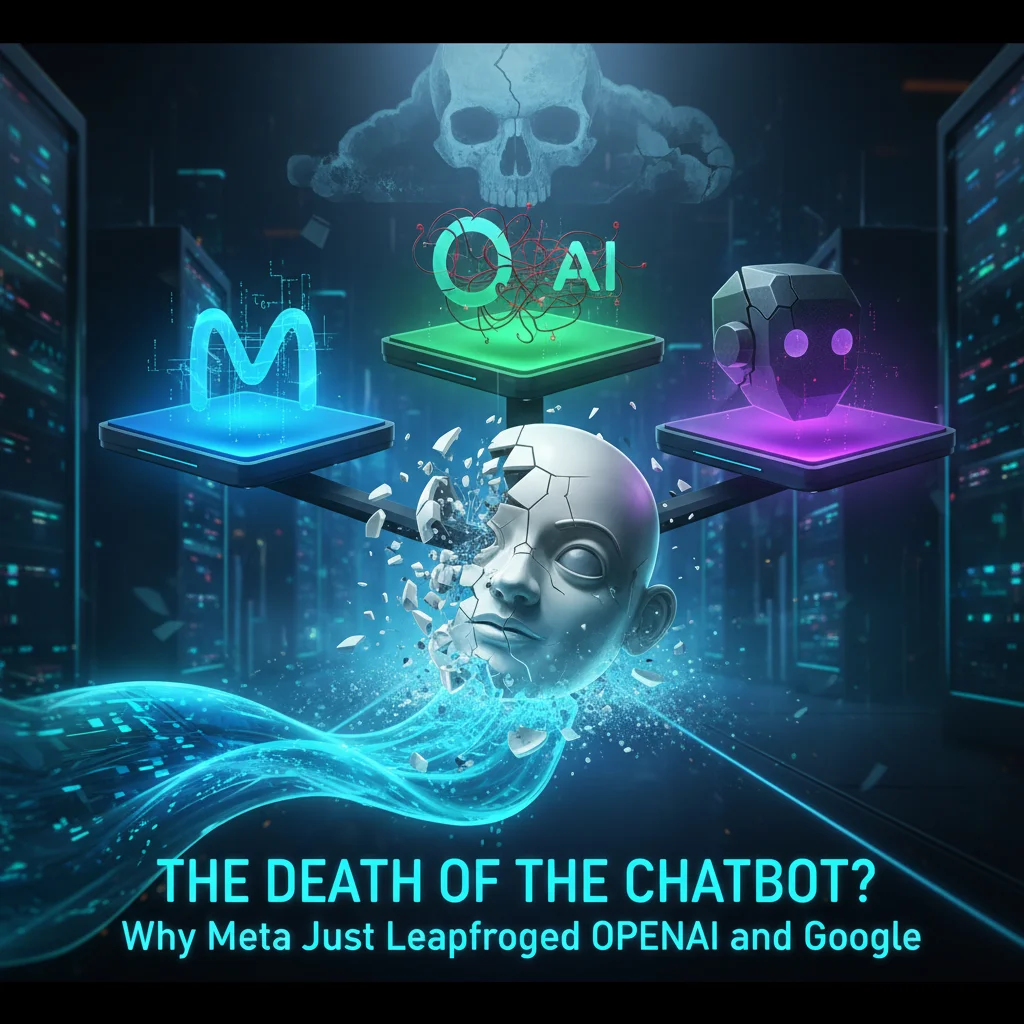
For years, the chatbot reigned supreme as the public face of artificial intelligence. From customer service pop-ups to digital assistants, these conversational interfaces promised a revolution in human-computer interaction. Yet, despite their widespread adoption, many have left users feeling frustrated, encountering limitations that reveal the 'glass ceiling' of traditional AI. While OpenAI and Google have captivated the world with increasingly powerful large language models (LLMs), Meta has been quietly engineering a profound shift, one that doesn't just improve chatbots but potentially renders them obsolete. Welcome to the era of the AI agent, where Meta's strategic pivot could see them leapfrogging their formidable competitors and redefining the future of digital interaction and business automation.
This isn't merely about better conversations; it's about autonomous entities capable of understanding context, executing multi-step tasks, and proactively delivering value across Meta's vast ecosystem. As we stand at the precipice of this new AI frontier, agencies like Integradyn.ai are keenly observing how this evolution will reshape digital strategies, productivity tools, and the very definition of a 'digital employee'. The question is no longer whether AI will transform our world, but how quickly and profoundly AI agents will redefine our daily digital lives and business operations.
- Traditional chatbots are dying: Meta's AI agents go beyond mere conversation, offering proactive, multi-step task execution.
- Meta's strategic advantage: Deep integration of AI agents across WhatsApp, Instagram, and Messenger provides unparalleled real-world data and user reach.
- Autonomous AI is here: These agents act as 'digital employees,' automating complex business processes and boosting productivity.
- Business transformation is imminent: Companies must adapt to leverage AI agents for enhanced customer experience, operational efficiency, and new revenue streams.
- Integradyn.ai's expert take: We outline how businesses can prepare for and integrate this next wave of Generative AI and AI Automation for competitive advantage.
What You'll Learn
- The Chatbot's Glass Ceiling: Why Traditional AI Fell Short
- Meta's Bold Play: Understanding the AI Agent Revolution
- Beyond Conversation: The Rise of Autonomous AI and Digital Employees
- The Future Is Agentic: What This Means for Businesses and the AI Landscape
- Frequently Asked Questions About Meta AI Agents
The Chatbot's Glass Ceiling: Why Traditional AI Fell Short
For years, businesses invested heavily in chatbots, driven by the promise of 24/7 customer support and streamlined interactions. However, the reality often fell short of expectations. These early iterations, largely rules-based or limited by the confines of their immediate conversational context, struggled with nuance, complex requests, and genuine problem-solving.
Even with the advent of large language models (LLMs), which significantly enhanced conversational fluency, many 'AI chatbots' remained primarily reactive interfaces. They could generate impressive text, summarize information, and answer questions, but their ability to independently act, learn, and persist across tasks was largely absent. This fundamental limitation represents the 'chatbot's glass ceiling' – a barrier preventing true autonomous functionality.
The distinction between a chatbot and an AI agent is crucial for understanding Meta's groundbreaking move. A chatbot, even a sophisticated one powered by Generative AI, typically responds to user prompts within a single interaction. It doesn't inherently remember previous steps, plan future actions, or execute tasks across different applications without explicit, step-by-step human direction.
AI agents, conversely, are designed for autonomy. They possess an internal 'reasoning' loop, allowing them to perceive their environment, form goals, devise plans, and execute those plans, often interacting with various tools and APIs. They learn from experience, adapt to new information, and can persist in pursuing a goal over extended periods, even without continuous human input. This represents a significant evolution in Machine Learning capabilities.
The core limitation of traditional chatbots, even LLM-powered ones, is their reactivity and lack of true autonomy. AI agents, however, are designed to perceive, plan, act, and learn independently, fundamentally shifting the paradigm of human-computer interaction.
While companies like OpenAI and Google have focused heavily on pushing the boundaries of raw LLM power and multi-modality (think ChatGPT's advanced reasoning or Google's Gemini), Meta has been strategically building an architecture around agentic capabilities. They've recognized that raw intelligence isn't enough; the ability to act intelligently and autonomously within a vast ecosystem is what truly unlocks the next wave of AI productivity tools.
This isn't to say OpenAI and Google aren't pursuing agentic AI; they certainly are. However, Meta's deep integration across its social platforms, coupled with their open-source Llama models, positions them uniquely. Their strategy focuses on embedding these autonomous entities directly into the fabric of billions of users' daily digital lives, providing an unprecedented scale for learning and deployment. This proactive approach to the Future of Tech is giving them a distinct head start in defining what 'AI Automation' truly means for the everyday user and for businesses.
The traditional chatbot experience often led to conversational dead-ends or required users to repeat information. These friction points eroded trust and limited the real-world utility of AI. As Integradyn.ai's digital marketing specialists often observe, effective digital tools must reduce friction, not introduce it. The shift to AI agents directly addresses this critical challenge, moving from reactive responses to proactive solutions.
Chart Title: Chatbot vs. AI Agent Capabilities
Chatbot (Traditional/LLM)
Primary Function: Conversational interaction, Q&A, information retrieval. Limited memory, reactive.
Tools Used: Primarily natural language processing.
Complexity: Single-turn or simple multi-turn conversations.
Autonomy: Low, requires explicit user prompts for each step.
AI Agent (Meta's Approach)
Primary Function: Goal-oriented task execution, proactive problem-solving, continuous learning. Persistent memory.
Tools Used: NLP, APIs, internal planning models, external applications.
Complexity: Multi-step, cross-application tasks, complex workflows.
Autonomy: High, plans and executes tasks independently to achieve a defined goal.
Meta's investment in building these autonomous entities directly into their widely used platforms like WhatsApp, Instagram, and Messenger means that these AI agents aren't just theoretical constructs. They are being deployed at an unprecedented scale, learning from billions of interactions. This iterative learning cycle is critical for rapid improvement and adaptation, something that gives Meta a significant edge in practical AI development.
The journey from simple scripts to sophisticated Generative AI chatbots has been remarkable. However, the next frontier demands more than just intelligent conversation. It requires intelligent action. This fundamental re-evaluation of AI's role is precisely where Meta has placed its bets, potentially leaving competitors still optimizing their conversational interfaces playing catch-up in the new world of proactive, autonomous AI agents. The era of the digital employee, capable of much more than just chatting, is upon us.
Meta's Bold Play: Understanding the AI Agent Revolution
Meta's entry into the AI agent landscape isn't just an incremental update; it's a strategic overhaul designed to embed Artificial Intelligence deeper into our digital lives. By integrating advanced AI agents directly into its colossal family of apps – WhatsApp, Instagram, and Messenger – Meta is creating a new paradigm for user interaction and business functionality. This move leverages their unparalleled user base and data insights, providing a fertile ground for these agents to learn, adapt, and evolve at an exponential rate.
At the core of Meta's approach is the belief that AI should be more than a conversational partner; it should be an active participant in achieving user goals. These AI agents, powered by Meta's Llama 3 models, are designed to be multi-modal, meaning they can understand and generate text, images, and potentially other forms of media. More importantly, they are built for persistence and proactivity, distinguishing them sharply from their chatbot predecessors.
"Meta's genius isn't just in building powerful LLMs, but in integrating them as autonomous agents within the very fabric of how billions communicate. This real-world, large-scale deployment is the ultimate proving ground and a significant competitive advantage."
Dr. Elaine Chen, AI Ethics ResearcherImagine an AI agent on WhatsApp that doesn't just answer questions about your flight but proactively tracks delays, suggests alternative routes, and even rebooks your ride share. This level of anticipatory service moves far beyond the reactive chat window. On Instagram, an AI agent could help you design content, suggest relevant trends, and even manage your interactions with followers based on your brand's voice.
This deep integration across platforms is Meta's secret weapon. It allows their AI agents to access a rich tapestry of user context, preferences, and behaviors. This contextual awareness is paramount for genuine autonomy and helpfulness. Instead of generic responses, users will receive personalized, relevant, and timely assistance.
Start identifying repetitive, rule-based tasks within your business operations that could be delegated to an AI agent. Think beyond customer service chats to data analysis, content generation, and preliminary research workflows. This foresight will be crucial.
For businesses, this represents a monumental shift towards AI Automation. Digital Employees, powered by Meta's AI agents, can handle a myriad of tasks that traditionally required human intervention. From scheduling appointments and managing inventory inquiries on WhatsApp Business to generating marketing copy and designing social media posts on Instagram, the potential for efficiency gains is staggering. This isn't just about saving costs; it's about reallocating human talent to higher-value, more creative endeavors.
The term 'Manus AI' in the context of Meta might refer to an internal project or a conceptual framework for humanoid or highly capable agents. While Meta itself hasn't publicly branded its consumer-facing agents as 'Manus AI', the underlying goal is to create highly capable, intelligent assistants that feel like an extension of the user's will. These agents learn from interactions, personalizing their approach over time. This continuous learning cycle, fueled by billions of users, is a key differentiator.
The experts at Integradyn.ai believe that this move by Meta signifies a maturation of Generative AI. It's no longer just about generating text or images; it's about empowering AI to act strategically and autonomously within complex digital environments. Businesses that fail to understand this transition from 'chat' to 'agent' risk being left behind in the rapidly evolving landscape of AI Productivity Tools.
Moreover, Meta's open-source approach with Llama models fosters a wider ecosystem of innovation. While Meta leverages Llama 3 for its own integrated agents, the open availability allows other developers and businesses to build custom AI agents atop a powerful foundation. This democratizes access to advanced AI, accelerating its adoption and diverse applications across industries.
Ready to Transform Your Business?
Get a free consultation and see how we can help you integrate cutting-edge AI agents to dominate your market.
Schedule Your Free CallThe strategic implications are enormous. Meta's ability to roll out sophisticated AI agents directly to billions of users, offering features far beyond typical chatbots, grants them a unique position in the Tech News cycle and the broader AI arms race. While OpenAI and Google continue to refine their core LLM offerings and explore agentic behaviors, Meta is already deploying a comprehensive, integrated agent experience. This could very well be the defining moment that reshapes the competitive dynamics of the AI industry, proving that practical, scaled application of AI agents is the true measure of leadership.
Beyond Conversation: The Rise of Autonomous AI and Digital Employees
The transition from chatbots to AI agents marks a fundamental shift from reactive interaction to proactive autonomy. This isn't just an upgrade; it's a redefinition of what Artificial Intelligence can achieve. Autonomous AI refers to systems capable of self-governance, independent decision-making, and executing tasks without constant human intervention. Meta's AI agents exemplify this, moving beyond mere conversational prowess to become active, goal-oriented participants in our digital workflows.
These 'digital employees' are designed to perform complex, multi-step tasks that traditionally required human input or elaborate, rigid automation scripts. Unlike a chatbot that might provide a link to a booking site, an AI agent could actually navigate the site, input preferences, complete the booking, send a confirmation, and even add it to your calendar. This ability to 'reason and act' across diverse digital environments is a hallmark of true autonomous AI.
Goal Setting & Perception
The AI agent receives a high-level objective (e.g., "Plan my weekend trip to the mountains") or proactively identifies a need based on user behavior and preferences (e.g., "You mentioned wanting a new recipe for dinner").
Planning & Tool Selection
It breaks down the goal into smaller, actionable steps, determining which external tools or internal capabilities (e.g., search engines, booking APIs, image generators) are required to achieve each step.
Execution & Monitoring
The agent executes the plan, interacting with tools and external systems, constantly monitoring progress. It adapts if unexpected obstacles arise, using its reasoning capabilities to devise new sub-plans.
Learning & Refinement
Through each interaction and task completion, the AI agent learns and refines its strategies, improving its efficiency and effectiveness over time. This continuous feedback loop is critical for its evolution.
The impact on business productivity and efficiency is monumental. For service businesses, AI Productivity Tools like these agents can automate everything from initial customer qualification and scheduling to personalized follow-ups and data entry. Imagine an AI agent on Instagram handling direct messages, answering FAQs, and even processing simple sales inquiries, all while maintaining brand voice and tone. This frees up human employees to focus on more complex customer issues, strategic planning, and creative tasks.
The distinction between traditional automation and AI agents is also stark. Traditional automation often relies on predefined rules and workflows that are rigid and easily breakable by unexpected inputs. AI agents, powered by Generative AI and advanced Machine Learning, can handle ambiguity, learn from mistakes, and adapt to changing conditions. They possess a level of flexibility and intelligence that far surpasses previous automation technologies.
While AI agents offer immense potential, ethical considerations are paramount. Ensure transparent communication with users about AI interaction, maintain robust data privacy protocols, and implement strong human oversight mechanisms to prevent unintended bias or misuse.
However, the rise of Autonomous AI also brings forth critical challenges and ethical considerations. The more autonomous an AI becomes, the more important it is to ensure its actions align with human values and intentions. Issues of accountability, transparency, and potential bias in decision-making must be addressed proactively. According to the SEO specialists at Integradyn.ai, trust and transparency will be key factors in the widespread adoption of these advanced AI systems. Clear guidelines and robust oversight mechanisms are essential for successful deployment of AI Automation.
The concept of 'Digital Employees' is no longer science fiction. Businesses leveraging these advanced AI agents can achieve unprecedented levels of scalability and operational excellence. Imagine a small business using WhatsApp AI to manage all customer inquiries, from product information to returns, acting as a fully integrated customer service department. Or an Instagram AI agent automating content scheduling and engagement analysis. These scenarios are quickly becoming reality thanks to Meta's aggressive push into this domain.
The team at Integradyn.ai recommends that businesses start exploring pilot projects with AI agents. Understanding their capabilities and limitations in a controlled environment is crucial before widespread deployment. The Future of Tech is not just about adopting new tools, but intelligently integrating them into existing workflows to maximize their impact. This move by Meta is a clear signal: the era of truly autonomous, proactive AI is here, and it promises to reshape Business Automation in profound ways. Are you ready to onboard your first digital employee?
The Future Is Agentic: What This Means for Businesses and the AI Landscape
Meta's strategic shift towards AI agents is not merely a technological advancement; it's a foundational change that will ripple across industries, redefine competitive landscapes, and profoundly impact how businesses operate. The future is undoubtedly agentic, characterized by autonomous AI systems working alongside humans, driving unprecedented levels of productivity and innovation.
For businesses, the strategic implications are enormous. Early adopters of AI agents will gain a significant competitive advantage. This includes enhanced customer experiences through personalized, proactive service on platforms like WhatsApp AI and Instagram AI. Operational efficiencies will skyrocket as 'digital employees' handle repetitive, time-consuming tasks, freeing human talent for more complex, creative, and strategic work. This adoption of AI Productivity Tools is no longer optional but essential for sustained growth.
The impact will be felt across diverse sectors. E-commerce businesses can leverage AI agents for personalized shopping assistants, managing order inquiries, and even automating returns processing. Healthcare providers could use them for initial patient triage, appointment scheduling, and information dissemination. Marketing teams will see AI agents automate content generation, social media management, and performance analysis, optimizing campaigns in real-time. This is the true promise of Business Automation powered by advanced Generative AI.
So, what will OpenAI and Google do next? While they possess formidable LLM technology, their current ecosystems don't offer the same integrated, user-facing agent deployment channels as Meta. They will undoubtedly accelerate their efforts in agentic AI, potentially through strategic partnerships, direct application development, or by further empowering developers to build agents on their foundational models. The race for AI agent dominance has just begun, and Meta has fired a powerful starting gun.
However, human oversight and training remain paramount. AI agents are powerful tools, but they require careful calibration, continuous monitoring, and human intervention for complex, nuanced, or ethical decisions. The role of humans will evolve from task execution to AI management, strategy, and ethical stewardship. Organizations will need to train their workforce not just to use AI, but to collaborate with it effectively.
"The next competitive frontier in AI isn't about who has the biggest model, but who can deploy intelligent agents at scale, deeply integrated into everyday workflows. Meta's ecosystem advantage is immense."
Sarah Chen, Tech Analyst, 'Future of AI' InsightsFor service businesses aiming to thrive in this new landscape, Integradyn.ai provides crucial expertise. We guide clients through the complexities of integrating AI agents, from identifying high-impact use cases to implementing robust oversight frameworks. Our approach ensures that AI Automation enhances, rather than disrupts, your existing operations, turning cutting-edge AI into tangible business growth. The focus is on creating value, not just adopting technology for technology's sake.
The Future of Tech is not just about making existing processes faster; it's about reimagining them entirely. AI agents promise to unlock new business models, create hyper-personalized customer journeys, and allow for unprecedented operational agility. Companies that embrace this shift will be the leaders of tomorrow, while those who cling to the 'chatbot' mentality risk falling significantly behind.
Meta's ambitious move signals the undeniable progression of AI from a conversational tool to an autonomous, active partner. It's a wake-up call for the entire industry. The death of the chatbot, as we know it, paves the way for a more intelligent, proactive, and deeply integrated AI experience that promises to revolutionize every aspect of our digital world. The journey into the age of AI Agents has just begun, and it's full of transformative possibilities for those ready to embrace it.
Unlock Your Business's AI Potential
Discover how Integradyn.ai can help your service business leverage AI agents for competitive advantage. Explore our services today!
View Our AI SolutionsFrequently Asked Questions
What is the difference between a chatbot and an AI agent?
A chatbot is primarily a conversational interface, responding to prompts. An AI agent is an autonomous system capable of perceiving its environment, setting goals, planning, executing multi-step tasks, and learning from experience, often without continuous human input. Meta's focus is on developing true AI Agents.
Why is Meta considered to be 'leapfrogging' competitors like OpenAI and Google?
Meta's advantage lies in its deep integration of advanced AI agents (powered by Llama 3) across its vast social platforms like WhatsApp, Instagram, and Messenger. This provides unparalleled scale for deployment, real-world data collection, and practical application, moving beyond just powerful Large Language Models.
How will Meta AI agents integrate into platforms like WhatsApp and Instagram?
Meta AI agents will be embedded directly into the user experience, capable of answering questions, generating content, managing tasks (e.g., booking, scheduling), and providing personalized assistance proactively. On WhatsApp, they can aid in customer service; on Instagram, they can assist with content creation and engagement.
What is Autonomous AI?
Autonomous AI refers to artificial intelligence systems that can operate and make decisions independently, without constant human oversight. They can perform complex tasks, adapt to new information, and pursue goals over extended periods, essentially acting as 'digital employees.'
What are 'Digital Employees' and how do they benefit businesses?
Digital Employees are AI agents that perform business tasks typically handled by human staff, such as customer service, data entry, scheduling, or content generation. They offer benefits like 24/7 availability, scalability, reduced operational costs, and increased efficiency, freeing human employees for strategic work.
How can businesses prepare for the rise of AI agents?
Businesses should identify repetitive tasks suitable for automation, educate their teams on AI collaboration, establish ethical guidelines, and consider pilot programs for integrating AI agents. Consulting with experts like Integradyn.ai can provide a strategic roadmap for AI Automation.
What is Generative AI's role in AI agents?
Generative AI, particularly Large Language Models (LLMs) like Meta's Llama 3, provides the core 'brain' for AI agents. It enables them to understand natural language, generate creative content, reason about tasks, and learn from data, making their autonomous actions intelligent and adaptable.
Are there ethical concerns with highly autonomous AI agents?
Yes, ethical concerns include data privacy, potential for bias in decision-making, accountability for agent actions, job displacement, and the need for transparent AI-human interaction. Robust human oversight and clear ethical frameworks are crucial for responsible deployment.
Will AI agents replace human jobs?
While AI agents will automate many repetitive and rule-based tasks, they are more likely to augment human roles rather than entirely replace them. They free humans to focus on creative problem-solving, strategic thinking, and tasks requiring emotional intelligence, leading to job transformation rather than mass displacement.
How does Meta's open-source Llama model contribute to its AI agent strategy?
By open-sourcing Llama, Meta fosters a wider ecosystem of innovation. Developers and businesses can build custom AI agents on top of Meta's powerful foundational models, accelerating the adoption and diverse application of agentic AI beyond Meta's own platforms.
What kind of 'AI Productivity Tools' can we expect from these agents?
Expect tools for automated content creation (text, images, video), advanced data analysis, personalized marketing campaign management, proactive customer support, streamlined operational workflows, intelligent scheduling, and much more, tailored to specific business needs.
What is the 'Future of Tech' for AI beyond agents?
Beyond agents, the Future of Tech involves increasingly multimodal AI (understanding all forms of data), embodied AI (robots with AI agents), hyper-personalization, and AI systems capable of scientific discovery and complex problem-solving at an unprecedented scale, leading towards Artificial General Intelligence (AGI).
How can Integradyn.ai help my business leverage AI agents?
Integradyn.ai specializes in guiding service businesses through AI adoption. We provide strategic consulting, identify high-impact AI agent use cases, assist with integration, and develop custom solutions to enhance operational efficiency, customer engagement, and overall business growth using advanced AI Automation.
Is 'Meta Acquisition' a factor in their AI strategy?
While Meta is known for acquisitions, its current AI agent strategy is primarily driven by internal R&D, particularly with Llama models and deep integration into its existing platforms. Future strategic acquisitions of AI talent or specialized agent technologies are always a possibility to accelerate their lead.
What industries will be most affected by AI agents first?
Industries with high volumes of repetitive tasks, customer interactions, or data analysis will see the earliest and most profound impact. This includes customer service, e-commerce, marketing, finance, healthcare administration, and certain creative industries. Ultimately, almost all sectors will be affected by AI Automation.
Legal Disclaimer: This article was drafted with the assistance of AI technology and subsequently reviewed, edited, and fact-checked by human writers to ensure accuracy and quality. The information provided is for educational purposes and should not be considered professional advice. Readers are encouraged to consult with qualified professionals for specific guidance.