Meta's $2B Bet: How Manus AI Fuels General Agent Revolution
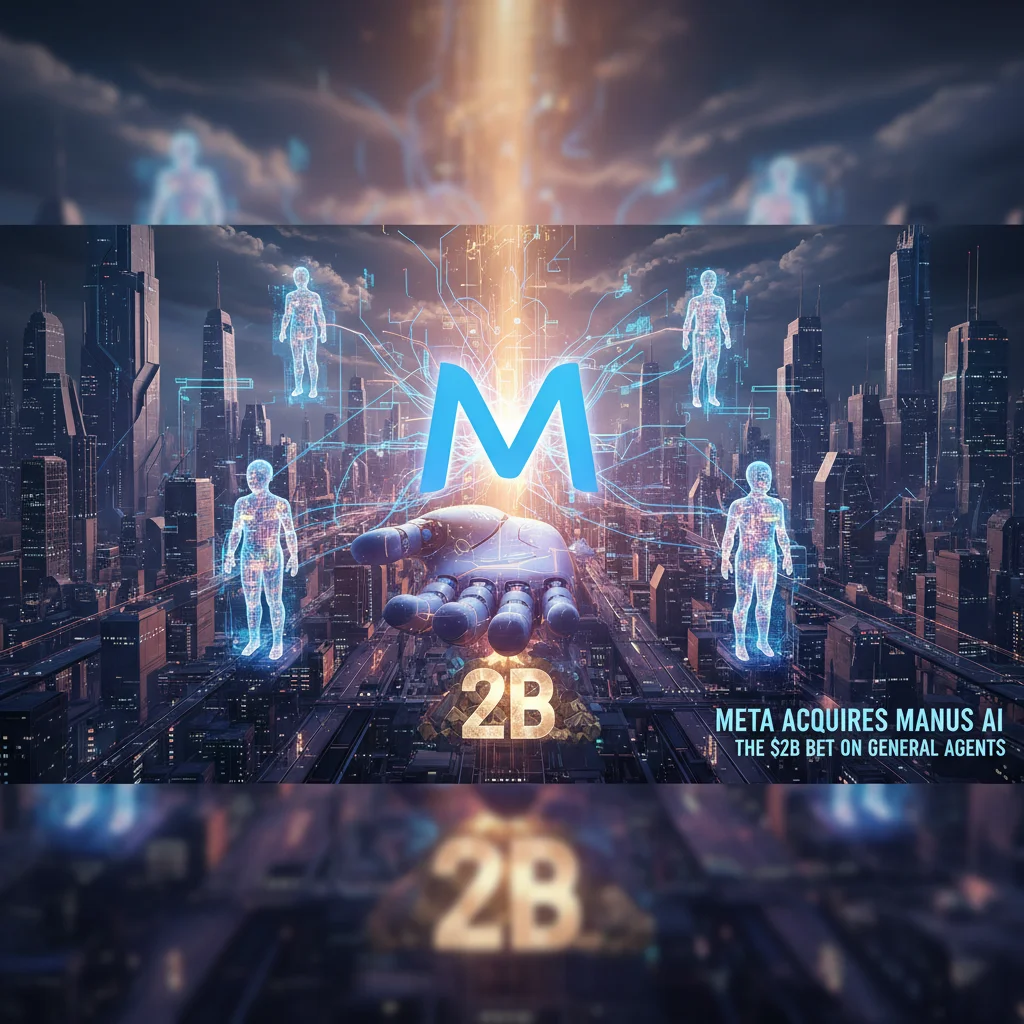
The landscape of Artificial Intelligence is evolving at an unprecedented pace, with technological giants vying for supremacy in the next frontier. Amidst this intense competition, Meta has made a decisive move that reverberates across the industry: the reported acquisition of Manus AI for a staggering $2 billion. This isn't just another tech merger; it's a profound statement about Meta's long-term vision, explicitly targeting the development of sophisticated General Agents.
This strategic investment signals a monumental shift from specialized AI models to more versatile, autonomous entities capable of performing a wide array of tasks. It underscores a belief that the future of tech lies in empowering AI with greater independence and broader understanding, moving us closer to truly intelligent systems. For businesses and consumers alike, this development heralds a new era of possibilities, challenges, and transformative change.
In this comprehensive article, we will delve into the intricate details of Meta's bold acquisition, exploring what Manus AI brings to the table and why General Agents are considered the holy grail of modern Artificial Intelligence. We'll analyze the potential implications for various industries, the ongoing AI arms race with contenders like Google Gemini and Grok AI, and the ethical considerations that accompany such powerful advancements. Moreover, we'll equip you with insights from industry experts, including those from Integradyn.ai, on how to navigate this rapidly changing technological tide.
Join us as we unpack the layers of this groundbreaking development, understanding not just what happened, but what it truly means for the future of tech and the pervasive integration of machine learning into our daily lives.
- Meta acquired Manus AI for $2 billion to accelerate General Agent development.
- Manus AI's expertise in autonomous reasoning is key for Meta's vision.
- General Agents aim for versatile, independent task execution beyond current AI.
- This acquisition positions Meta competitively in the global AI arms race.
What You'll Learn
The Shifting Sands: Meta's $2 Billion Bet on General AI
The Artificial Intelligence sector is currently defined by an intense push towards more capable and autonomous systems. While Large Language Models (LLMs) and Generative AI have captured headlines with their impressive creative and conversational abilities, the true north star for many tech giants is the development of General Agents.
These agents are envisioned to transcend the limitations of current AI, moving beyond single-task proficiency to achieve a broader understanding and ability to act autonomously in complex environments. Meta's rumored acquisition of Manus AI for $2 billion marks a significant acceleration in this pursuit, signaling their intent to lead this transformative wave.
Manus AI: The Missing Piece in Meta's Puzzle
Manus AI, while not a household name, has been a quiet powerhouse in the realm of advanced machine learning and robotics. Their expertise lies in developing highly sophisticated AI models capable of complex reasoning, environment interaction, and multi-modal understanding.
Specifically, Manus AI's work has focused on creating adaptive AI systems that can learn from sparse data, generalize across different tasks, and exhibit robust decision-making. This capability is crucial for the leap from specialized Generative AI to truly general-purpose Autonomous Agents. Their contributions align perfectly with Meta's ambitious vision for the metaverse and beyond.
Meta's existing AI research, including its contributions to Large Language Models and computer vision, provides a strong foundation. However, integrating Manus AI's specialized knowledge in autonomous reasoning and real-world interaction is expected to provide a critical competitive edge.
This acquisition isn't merely about acquiring talent or technology; it's about synthesizing distinct AI strengths to forge a new path. The combination aims to accelerate Meta's ability to build AI that can not only understand but also act proactively and intelligently within dynamic digital and potentially physical spaces.
Why General Agents are the Next Frontier
Current Generative AI excels at content creation, whether it's text, images, or code. However, these models often lack true agency, struggling with planning, long-term memory, and executing multi-step tasks independently. This is where the concept of General Agents becomes paramount.
General Agents are designed to be more than just powerful prediction engines. They embody a deeper level of intelligence, characterized by the ability to set goals, devise strategies, adapt to new information, and execute actions in a real-world or simulated environment. Think of an AI that can manage an entire project, from conception to execution, without constant human oversight.
This level of AI automation promises to revolutionize industries far beyond just tech. From scientific research and personalized education to advanced robotics and intelligent infrastructure, the potential applications are vast and transformative. It represents a paradigm shift from AI being a tool to AI becoming a partner in complex problem-solving.
Agencies like Integradyn.ai recognize this fundamental shift. We advise our clients that understanding and preparing for the advent of General Agents is no longer optional but a strategic imperative. The businesses that embrace these future tech trends will be the ones that define their respective markets.
The AI Arms Race: Meta vs. Google Gemini, Grok AI, and OpenAI
Meta's move is also a direct challenge in the escalating AI arms race. Competitors like Google with its sophisticated Gemini model, Elon Musk's Grok AI, and OpenAI with its cutting-edge Large Language Models are all pushing the boundaries of what Artificial Intelligence can achieve.
Google Gemini aims for multi-modality and advanced reasoning, seeking to integrate various data types into a unified, powerful model. Grok AI, meanwhile, emphasizes real-time knowledge and a distinctive personality, aiming for a different flavor of advanced AI interaction.
OpenAI continues to innovate, constantly refining its LLMs and exploring pathways to greater autonomy. This competitive environment fuels rapid innovation but also intensifies the pressure on each tech giant to secure leading positions in key AI domains. Meta's acquisition of Manus AI is designed to give them a significant competitive advantage in the race for true General Agents, differentiating their approach from others who may be more focused on specific AI applications or model architectures.
Meta's $2 billion acquisition of Manus AI is a strategic maneuver to accelerate the development of General Agents, signaling a shift beyond current Generative AI capabilities towards autonomous, multi-tasking intelligence. This move intensifies the global AI race and sets a new benchmark for future tech innovation.
Chart Title: The Evolution of AI: From Narrow to General
Narrow AI (ANI)
Specialized intelligence for a single task (e.g., chess, image recognition). Dominant until recently.
Generative AI (ANI+)
Capable of creating new content (text, images, code). More versatile but lacks agency and complex reasoning.
General Agents (AGI Pathway)
Autonomous systems capable of goal-setting, planning, and multi-domain problem-solving. The current frontier for Meta and others.
Beyond Chatbots: Unpacking the Power of General Agents
The term 'General Agents' represents a significant leap from the AI we commonly interact with today. While chatbots and virtual assistants, powered by Large Language Models, can simulate conversation and perform specific data retrieval, General Agents embody a much deeper level of Artificial Intelligence.
They are conceived as systems capable of understanding, learning, and applying intelligence across a wide range of tasks and environments, much like a human. This distinction is crucial for understanding Meta's strategic direction and the future of tech.
Defining Autonomous Agents and Their Capabilities
An Autonomous Agent, at its core, is an AI system that can operate independently within an environment, perceiving its surroundings and taking actions to achieve specific goals. General Agents extend this concept by being able to define their own goals, adapt to unforeseen circumstances, and even learn new skills without explicit reprogramming.
Their capabilities extend far beyond simple pattern recognition or content generation. They include advanced reasoning, common-sense understanding, long-term planning, and the ability to interact with complex digital and physical interfaces. Imagine an AI that can not only write a marketing campaign but also launch it, analyze its performance, and optimize it autonomously.
Such agents would be able to process multi-modal inputs – text, images, video, sensor data – and synthesize insights across them. This multi-modal intelligence allows for a more holistic understanding of situations, leading to more robust and contextually aware decision-making, a hallmark of true General Artificial Intelligence.
The development of these agents relies heavily on advancements in machine learning, particularly in areas like reinforcement learning, transfer learning, and meta-learning. These techniques enable AI to learn efficiently from experience and apply knowledge to new, unseen problems.
"The transition from 'smart tools' to 'autonomous partners' will redefine human-computer interaction and unleash unprecedented productivity. General Agents are not just an evolution; they're a revolution in how we conceive of intelligence."
Dr. Elaine Chen, Lead AI Ethicist at Cogito LabsReal-World Applications: A Glimpse into the Future
The advent of sophisticated General Agents promises to unlock a myriad of transformative applications across virtually every industry. In healthcare, an autonomous agent could analyze patient records, monitor real-time vitals, diagnose complex conditions, and even recommend personalized treatment plans, flagging potential risks that human doctors might overlook.
In finance, these agents could manage complex investment portfolios, execute high-frequency trades, and identify emerging market trends with unparalleled speed and accuracy. They could also automate compliance checks and risk assessment, vastly improving operational efficiency and security. For marketing and sales, autonomous agents could personalize customer journeys end-to-end, from initial contact to post-purchase support, optimizing campaigns in real-time based on granular user behavior.
They could also autonomously generate highly targeted content, manage ad spend, and even conduct market research. This level of AI automation offers profound efficiency gains and opens new avenues for innovation. According to the digital marketing experts at Integradyn.ai, integrating such agents effectively will be key to competitive advantage.
Manufacturing and logistics could see entire supply chains managed by General Agents, optimizing routes, predicting maintenance needs, and coordinating complex production schedules. Even in creative fields, General Agents could assist with ideation, draft preliminary designs, and manage collaborative projects. The possibilities are truly boundless.
Start identifying repetitive, high-volume tasks within your organization that currently require human decision-making. These are prime candidates for future AI automation via General Agents. Prioritize areas where data is abundant and processes are well-defined to prepare for integration.
Challenges on the Path to General AI
Despite the immense promise, the development of true General Agents faces significant hurdles. One of the primary challenges is the sheer computational power required to train and run models that can generalize across diverse domains. These systems demand vast datasets and colossal processing capabilities.
Another major obstacle is the challenge of ensuring safety and ethical alignment. As Autonomous Agents gain more independence, establishing robust control mechanisms, preventing unintended biases, and guaranteeing transparency in decision-making become paramount. The 'black box' problem, where AI's reasoning is opaque, remains a significant concern.
The complexity of human common sense and intuition is also incredibly difficult to replicate in a machine. While Large Language Models can mimic understanding, true contextual comprehension and adaptability in novel situations are still areas of active research. These are not trivial problems but rather foundational challenges that require breakthroughs in Artificial Intelligence research.
Furthermore, integrating these advanced AI systems into existing business infrastructure and ensuring human-AI collaboration is a complex undertaking. It requires not just technical expertise but also significant organizational change management. Digital marketing agencies like Integradyn.ai are already helping service businesses prepare for these shifts by developing robust digital transformation strategies. Learn more about our AI integration services.
Ready to Transform Your Business with AI?
The future is autonomous, and staying ahead means strategic planning. Get a free consultation to explore how advanced AI solutions can benefit your organization.
Schedule Your Free CallThe Ripple Effect: Business, Tech, and Societal Transformation
Meta's acquisition of Manus AI and its focus on General Agents will undoubtedly send ripples throughout the global economy and society. This advancement in Artificial Intelligence is not just a technological upgrade; it's a foundational shift that will redefine how we work, interact, and organize our lives.
Understanding these far-reaching implications is crucial for businesses, policymakers, and individuals alike. The rise of sophisticated Autonomous Agents presents both unprecedented opportunities and significant challenges that demand careful consideration and proactive planning.
Transforming Industries: From Silicon Valley to Main Street
The most immediate and profound impact will be felt across the tech industry, accelerating the development cycles for software, hardware, and new AI services. Companies not actively investing in Generative AI and General Agents risk being left behind in a rapidly evolving market. The competition will only intensify, spurring further innovation.
Beyond tech, industries such as finance, healthcare, manufacturing, and creative fields are poised for radical transformation. In healthcare, General Agents could personalize medicine, accelerate drug discovery, and optimize hospital operations with superhuman efficiency. For financial services, they could revolutionize risk assessment, fraud detection, and customer service.
The marketing landscape, in particular, stands to be dramatically altered. Autonomous Agents could manage entire campaigns, from content creation and ad placement to performance analytics and budget optimization. The SEO specialists at Integradyn.ai believe that this will elevate the importance of strategic oversight and ethical AI deployment.
Small businesses, initially wary of high AI implementation costs, will eventually find scalable solutions that allow them to compete more effectively. The overarching trend points towards greater efficiency, personalization, and automation across all sectors, driven by these advanced machine learning systems.
Economic Shifts: Jobs, Productivity, and New Opportunities
The emergence of General Agents will undoubtedly lead to significant economic shifts. While concerns about job displacement are valid, history suggests that technological advancements also create new roles and industries.
Tasks that are repetitive, dangerous, or require extensive data processing are prime candidates for AI automation. This will free up human workers to focus on more creative, strategic, and interpersonal roles, enhancing overall productivity and innovation. The demand for AI trainers, ethicists, system integrators, and AI-driven service professionals will surge.
The economic impact could be a massive boost in productivity, potentially leading to new forms of wealth creation and a redefinition of work itself. However, equitable distribution of these gains and robust retraining programs will be crucial to mitigate social disruption.
For service businesses, understanding these shifts is paramount. The team at Integradyn.ai helps clients identify areas where AI can augment their workforce, not just replace it, focusing on strategic implementation for sustained growth. Our approach is always to leverage technology to enhance human capabilities and customer value.
Assess Current Processes
Identify which business operations are highly repetitive, data-intensive, or prone to human error. These are prime candidates for future AI automation.
Educate Your Team
Provide training and resources for employees to understand emerging AI technologies like General Agents. Foster a culture of learning and adaptation.
Develop an AI Strategy
Work with experts (like Integradyn.ai) to draft a long-term AI strategy, outlining how General Agents could be integrated to achieve business objectives and enhance customer experience. Explore our strategic consulting.
Pilot Small-Scale Projects
Before full-scale deployment, test AI solutions on smaller projects to understand their impact, refine processes, and gather feedback without significant risk.
Ethical Dilemmas and Societal Considerations
As AI becomes more autonomous and general-purpose, ethical considerations move to the forefront. Questions of bias, accountability, transparency, and control become increasingly complex. Ensuring that General Agents operate ethically and align with human values is perhaps the greatest challenge.
The potential for AI to make decisions without human oversight, particularly in sensitive areas like justice, finance, or warfare, raises serious concerns. Developing robust ethical frameworks, regulatory guidelines, and mechanisms for human intervention is critical for responsible deployment.
Furthermore, the concentration of such powerful AI technology in the hands of a few tech giants could lead to new forms of societal inequality or control. Open research, collaborative development, and public discourse are essential to ensure these advancements benefit all of humanity.
Neglecting ethical considerations in AI development and deployment can lead to significant reputational damage, legal liabilities, and erosion of public trust. Prioritize responsible AI governance from the outset, focusing on transparency, fairness, and accountability.
The AI Arms Race: Meta's Vision for a General Agent Future
Meta's $2 billion investment in Manus AI is not an isolated event; it's a pivotal move in a high-stakes global competition for AI dominance. The leading tech players, including Meta, Google, OpenAI, and xAI (Grok AI), are all racing to build the most capable and widely adopted Artificial Intelligence systems.
Each company brings its unique strengths and strategic focus to this intense rivalry, shaping the future of tech in distinct ways. Meta's vision, amplified by the Manus AI acquisition, is particularly focused on ubiquitous, intelligent agents that enhance digital interaction across its ecosystem and potentially beyond.
Meta's Long-Term Goals with Manus AI
Meta's grand vision extends far beyond social media platforms. With its metaverse ambitions, the company aims to build interconnected virtual worlds where users interact with sophisticated digital entities. Manus AI's expertise in Autonomous Agents is crucial for populating these spaces with truly intelligent, adaptive, and interactive AI.
These General Agents could serve as hyper-personalized assistants, companions, educators, or even dynamic NPCs (non-player characters) that contribute meaningfully to virtual experiences. They would learn user preferences, anticipate needs, and facilitate seamless interactions across Meta's diverse offerings, from Instagram to Messenger and eventually, the metaverse.
Furthermore, this acquisition strengthens Meta's position in general Artificial Intelligence research, allowing them to push the boundaries of machine learning for foundational models. This deep integration of advanced AI is essential for their long-term strategy of creating an intelligent layer that pervades all their products and services, making them more intuitive and powerful.
The ultimate goal is to create an ecosystem where AI is not just a feature but a fundamental operating principle, enabling more natural and powerful human-computer interaction. This approach could redefine how users experience digital spaces.
The Competitive Landscape: Google Gemini, Grok AI, and OpenAI
The race for AI supremacy involves formidable contenders, each pushing the envelope in different directions. Google's Gemini, for instance, is designed as a highly multi-modal AI, capable of processing and understanding information from various sources—text, code, audio, image, and video—seamlessly. Its strength lies in its integrated approach to diverse data types.
OpenAI, a pioneer in Generative AI, continues to refine its Large Language Models, consistently setting benchmarks for natural language understanding and generation. Their focus remains on building powerful, general-purpose AI models that can be adapted to a wide array of applications, pushing towards Artificial General Intelligence (AGI).
Grok AI, from Elon Musk's xAI, positions itself with a unique blend of real-time knowledge access and a distinctive, often irreverent, personality. This approach aims to provide a more engaging and immediate AI experience, particularly for current events and informal queries, distinguishing itself from more formal AI systems.
Meta's investment in Manus AI allows them to specifically target the "General Agents" niche within this broader AI landscape, focusing on autonomy and complex task execution, an area where they aim to carve out a distinct leadership position. According to the SEO specialists at Integradyn.ai, understanding these nuanced competitive strategies is key to predicting future tech trends and guiding clients on their digital transformation journeys. Read more insights on AI news on our blog.
The Path to Artificial General Intelligence (AGI)
While General Agents represent a significant step, the ultimate goal for many AI researchers and tech giants remains Artificial General Intelligence (AGI)—an AI capable of understanding, learning, and applying intelligence to any intellectual task that a human being can.
The journey from current Generative AI to General Agents, and then potentially to AGI, is a continuum of increasing capability, autonomy, and generality. Each milestone brings us closer to a future where AI systems can truly reason, innovate, and contribute at a human-equivalent level across vast domains. This requires not just more data or more computational power, but fundamental breakthroughs in algorithms and theoretical understanding.
Meta's Manus AI acquisition accelerates their position on this path, providing them with crucial expertise in developing the foundational components for complex autonomous behavior. This long-term pursuit of AGI promises to reshape civilization in ways we are only beginning to comprehend.
Leverage AI for Your Business Today
Don't wait for the future; start integrating powerful AI strategies now. Speak with our experts about how to harness advanced tech for growth and efficiency.
Connect with an ExpertCase Study Snapshot: Potential Impact of General Agents
Imagine a mid-sized e-commerce business deploying a sophisticated General Agent for customer service. This agent goes beyond simple FAQs, proactively identifies potential issues, personalizes product recommendations, and even initiates re-engagement campaigns based on customer behavior. The results could be transformative.
Projected gains from such an implementation:
- Customer Satisfaction: +45% due to instant, personalized support.
- Operational Costs: -30% by automating routine inquiries and support tasks.
- Sales Conversion: +20% through hyper-personalized recommendations and proactive engagement.
- Employee Productivity: +60% as human agents focus on complex, high-value interactions.
These hypothetical stats underscore the immense potential for businesses across all sectors to achieve unprecedented levels of efficiency and customer engagement. Strategic partnerships with agencies like Integradyn.ai can help businesses craft similar success stories. View our client success stories.
Frequently Asked Questions
What is Manus AI?
Manus AI is a cutting-edge artificial intelligence company specializing in advanced machine learning, particularly in developing autonomous agents capable of complex reasoning, environment interaction, and multi-modal understanding. Their expertise lies in creating AI that can generalize across tasks.
Why did Meta acquire Manus AI?
Meta acquired Manus AI for an estimated $2 billion to accelerate its development of General Agents and strengthen its position in the competitive AI landscape. This move is crucial for Meta's long-term vision, including populating the metaverse with intelligent, adaptive AI entities and enhancing its overall AI capabilities.
What are General Agents in AI?
General Agents are advanced Artificial Intelligence systems designed to operate autonomously, understand, learn, and apply intelligence across a wide range of tasks and environments. Unlike specialized AI, they can set their own goals, devise strategies, adapt to new information, and learn new skills without explicit reprogramming.
How do General Agents differ from Large Language Models (LLMs)?
LLMs excel at understanding and generating human-like text, acting primarily as powerful content generators or conversational interfaces. General Agents, however, possess true agency; they can perceive, plan, act, and learn autonomously in dynamic environments, often integrating multiple modalities beyond just text.
What is the 'AI Arms Race' and who are the key players?
The 'AI Arms Race' refers to the intense global competition among tech giants to develop the most advanced Artificial Intelligence. Key players include Meta (with Manus AI), Google (with Gemini), OpenAI, and xAI (with Grok AI), all vying for leadership in foundational AI models and autonomous systems.
What are the potential benefits of General Agents for businesses?
General Agents can significantly boost business efficiency, productivity, and innovation. They can automate complex tasks, personalize customer experiences, optimize operations, and provide advanced insights, leading to cost reductions and new revenue streams. Agencies like Integradyn.ai help businesses unlock these benefits.
What are the ethical considerations surrounding General Agents?
Ethical concerns include ensuring AI safety, preventing biases, maintaining transparency in decision-making, and establishing robust control mechanisms for autonomous systems. The potential for job displacement and the concentration of power also require careful consideration and policy development.
How will this acquisition impact Meta's metaverse strategy?
The Manus AI acquisition is vital for Meta's metaverse strategy, enabling the creation of more intelligent, interactive, and autonomous AI entities (NPCs, assistants) within virtual worlds. This will enhance user experience, personalization, and the overall immersion of metaverse environments.
Is Artificial General Intelligence (AGI) the same as General Agents?
General Agents are a significant step towards AGI, but they are not the same. AGI refers to AI capable of understanding, learning, and performing any intellectual task that a human can. General Agents are highly capable autonomous systems that operate across multiple domains, but AGI represents the ultimate, broader goal of human-level intelligence.
How can businesses prepare for the rise of General Agents?
Businesses should start by assessing current processes for automation potential, educating their teams on emerging AI, developing a strategic AI roadmap, and piloting small-scale AI projects. Partnering with AI strategy experts like Integradyn.ai can provide a competitive edge. Contact us to get started.
What role does machine learning play in General Agents?
Machine learning is the foundational technology enabling General Agents. Advanced techniques such as reinforcement learning, transfer learning, and meta-learning are crucial for allowing these agents to learn from experience, adapt to new tasks, and generalize knowledge across different scenarios.
Will General Agents lead to mass job displacement?
While some jobs, particularly repetitive ones, may be automated, the historical pattern of technological advancement suggests new jobs and industries will emerge. General Agents are likely to augment human capabilities, shifting the focus of work towards creativity, strategy, and complex problem-solving rather than pure displacement.
What are some examples of AI automation enabled by General Agents?
Examples include fully automated customer service systems that resolve complex issues, intelligent manufacturing lines that adapt to demand changes, autonomous scientific research platforms, and personalized educational systems that create custom learning paths. The scope is virtually limitless.
How will Meta integrate Manus AI's technology?
Meta is expected to integrate Manus AI's expertise across its various product lines and research initiatives. This includes enhancing AI in its social media platforms, accelerating metaverse development, and contributing to foundational AI research for future generations of models. The integration will likely be deep and pervasive.
Where can I find more AI news and tech trends?
Stay informed by following reputable tech news outlets, academic journals, and industry blogs. For strategic insights and expert analysis on AI's impact on business, consider resources like the Integradyn.ai blog.
Legal Disclaimer: This article was drafted with the assistance of AI technology and subsequently reviewed, edited, and fact-checked by human writers to ensure accuracy and quality. The information provided is for educational purposes and should not be considered professional advice. Readers are encouraged to consult with qualified professionals for specific guidance.