The Hardware Pivot: OpenAI’s Visionary Collaboration with Johnny Ive for Next-Gen AI Devices
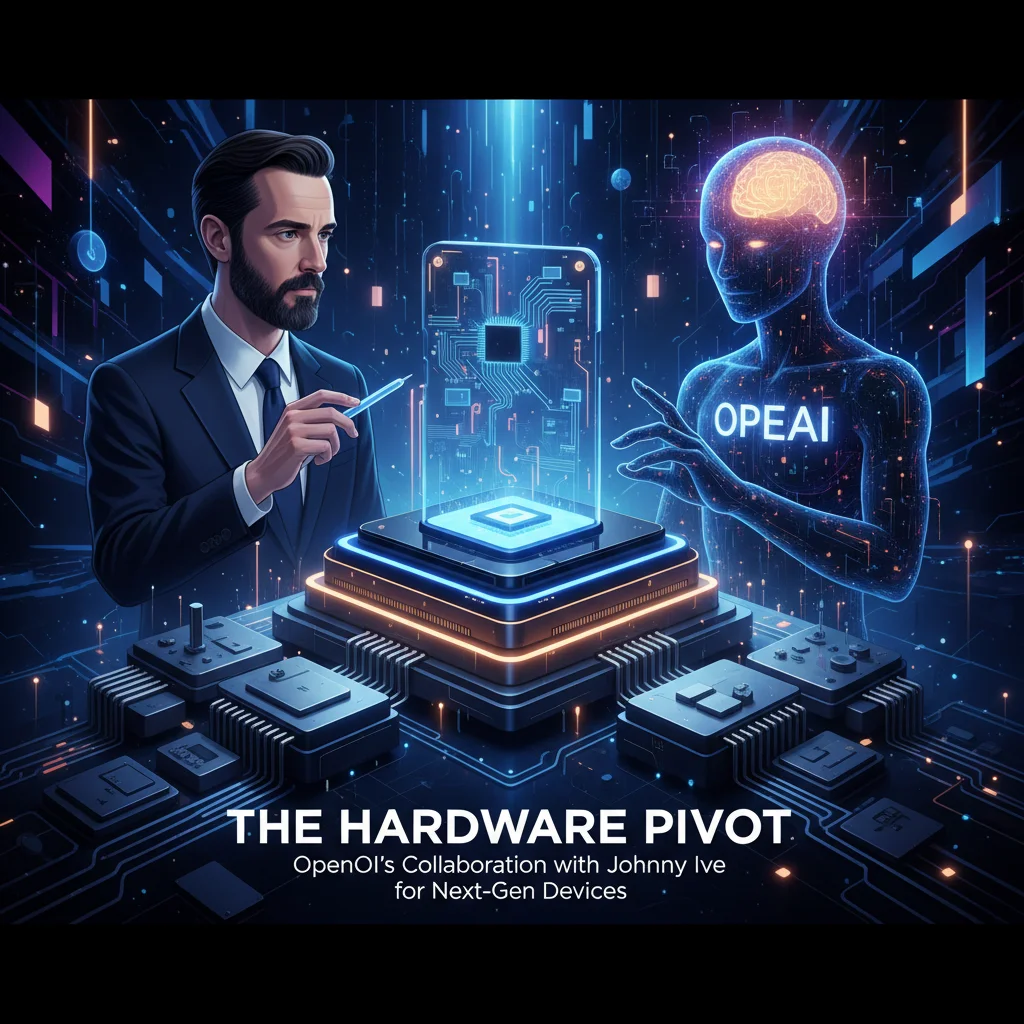
The landscape of artificial intelligence is undergoing a profound transformation. What began as a purely software-driven revolution is now extending its reach into the physical world. At the forefront of this exciting evolution is the groundbreaking collaboration between OpenAI, the pioneer of advanced AI models, and Sir Jony Ive, the design luminary renowned for shaping Apple's most iconic products.
This partnership signifies a pivotal moment: the hardware pivot. It’s a bold move to bridge the gap between abstract AI capabilities and tangible, user-centric devices. The goal is to create next-generation AI devices that are not just smart, but intuitively designed, seamlessly integrated into daily life, and fundamentally change how humans interact with technology.
For businesses in the digital realm, particularly those focused on digital marketing, SEO, and lead generation, understanding this shift is paramount. The emergence of these new AI devices will redefine user behavior, content consumption, and avenues for engagement. Agencies like Integradyn.ai are already anticipating these changes, strategizing how to leverage these innovative platforms for enhanced online presence and business growth.
- OpenAI's collaboration with Jony Ive marks a significant shift from software-only AI to integrated hardware-software devices.
- This partnership aims to create intuitive, human-centered AI devices that blend seamlessly into everyday life.
- Sir Jony Ive's design philosophy emphasizes simplicity and intuitive interaction, crucial for mass adoption of advanced AI.
- New AI devices will generate unique digital touchpoints, requiring innovative digital marketing and SEO strategies.
- Digital marketing agencies, like Integradyn.ai, must adapt rapidly to optimize content and experiences for these next-gen platforms to drive lead generation.
What You'll Learn
The Genesis of the Hardware Pivot: Why AI Needs a Body
For years, OpenAI has pushed the boundaries of artificial intelligence through its sophisticated language models and generative AI capabilities. However, these powerful AI systems have primarily resided in the digital realm, accessed through screens, keyboards, and microphones.
The vision now extends beyond the screen. The collaboration with LoveFrom, Jony Ive's design firm, signals a strategic decision to imbue AI with a physical form, creating devices that are not merely tools, but intuitive companions.
This pivot is driven by several critical factors. First, human-computer interaction needs to evolve beyond traditional interfaces. While smartphones and computers are powerful, they often act as barriers rather than seamless extensions of our will.
Second, AI's full potential can only be realized when it can interpret and interact with the physical world directly. Embodied AI can gather richer contextual data, understand nuances of human behavior, and provide assistance in a more natural, less intrusive way.
OpenAI's move into hardware with Jony Ive signifies a crucial shift towards embodied AI, aiming for more intuitive and context-aware human-computer interactions that transcend traditional screen-based interfaces.
Third, mass adoption of advanced AI requires products that are not just functional, but also beautiful, desirable, and easy to use. This is where Jony Ive's unparalleled expertise in industrial design becomes indispensable.
His philosophy, rooted in simplicity and user experience, will be key to making complex AI approachable for everyday consumers. The integration of cutting-edge AI with world-class design could unlock unprecedented levels of user engagement and utility.
The ultimate goal is to create devices that feel less like technology and more like natural extensions of ourselves. Imagine AI that understands your gaze, anticipates your needs based on subtle cues, and provides assistance without explicit commands.
This vision moves beyond voice assistants in smart speakers, aiming for a more symbiotic relationship between human and machine. It's about blending the digital and physical worlds seamlessly, powered by intelligence and wrapped in exquisite design.
Chart Title: Evolution of Human-AI Interaction
Era 1: Command-Based AI
Early AI, requiring precise instructions. Limited context, primarily text-driven. Example: Search engines, early chatbots.
Era 2: Conversational AI
Voice-activated assistants, natural language processing. Improved context, still largely software-bound. Example: Alexa, Siri, ChatGPT.
Era 3: Embodied AI (The Future)
AI integrated into physical devices, multi-modal interaction (voice, gesture, vision). Deep context, intuitive design. Example: OpenAI x Ive devices.
For digital marketers, this shift presents both challenges and unparalleled opportunities. New device types mean new user interfaces, new content formats, and new ways consumers discover information and make purchasing decisions.
Agencies like Integradyn.ai are already advising service businesses on preparing for this future. Understanding these emerging platforms will be crucial for maintaining a strong online presence and capturing new lead generation avenues.
The Ive Factor: Designing Intuitive AI Experiences
Sir Jony Ive's involvement is perhaps the most compelling aspect of this collaboration. His legacy at Apple is defined by a relentless pursuit of simplicity, elegance, and user delight. He is a master of industrial design, capable of transforming complex technology into approachable and even iconic products.
This philosophy is precisely what advanced AI needs to transition from a powerful backend engine to a ubiquitous, user-friendly front-end experience. The challenge with AI has always been making it feel natural, not robotic.
Ive's approach prioritizes the user's emotional connection to a device. He understands that form and function are inseparable, and that a truly intuitive product disappears into the background, allowing the user to focus on their task or interaction rather than the technology itself.
His emphasis on tactile feedback, thoughtful material choices, and minimalist aesthetics will be crucial in designing AI devices that feel organic and human-centric. This is essential for building trust and comfort with AI, ensuring mass adoption.
"Jony Ive's genius lies in his ability to make technology feel inevitable, rather than imposed. This is precisely the design philosophy AI needs to move beyond novelty and become truly indispensable in our lives."
Consider the contrast between a clunky, button-laden remote and a sleek, gesture-controlled interface. Ive's work consistently opts for the latter, reducing cognitive load and enhancing the overall experience. Applied to AI, this means devices that anticipate needs rather than waiting for explicit commands.
The design process will likely involve a deep exploration of how humans naturally interact. This could involve multi-modal inputs, combining voice, touch, gaze, and even biometric data to create a truly responsive and personalized AI experience.
Businesses should start thinking about 'ambient content' – information and services delivered seamlessly through various device forms, moving beyond traditional websites and apps. Consider how your brand can offer value in these new, less intrusive interaction paradigms.
This collaboration also signifies a commitment to solving complex problems at the intersection of hardware and software. It's not just about putting AI into a box; it's about co-designing the box and the intelligence within it from the ground up.
Such an integrated approach ensures that the physical device perfectly complements and elevates the AI's capabilities, leading to a truly harmonious user experience. This holistic design thinking is a hallmark of Ive's work and a game-changer for AI.
For digital marketing professionals and service businesses, the 'Ive Factor' means prioritizing user experience above all else. As AI devices become more intuitive, consumer expectations for seamless interactions across all digital touchpoints will rise.
The team at Integradyn.ai emphasizes that website design, content presentation, and even advertising formats must evolve to match this elevated standard. Frictionless user journeys will be key to successful SEO and lead generation.
Ready to Transform Your Business?
Get a free consultation and see how we can help you dominate your market in this evolving digital landscape.
Schedule Your Free CallThe agencies excelling in the future will be those that deeply understand user psychology and translate it into compelling digital experiences, regardless of the device. This means a renewed focus on design thinking in digital marketing strategies.
Technological Horizons: What These Devices Might Look Like
While specifics are scarce, we can speculate on the characteristics and potential forms of these next-gen AI devices emerging from the OpenAI-Ive partnership. They will likely be defined by their ability to seamlessly integrate into daily life, offering proactive assistance rather than reactive responses.
Imagine devices that are context-aware, understanding your environment, your schedule, and your preferences without being explicitly told. This level of intelligence demands a fusion of advanced sensors, powerful edge computing, and sophisticated AI models.
Ambient Computing & Contextual Awareness
Devices will blend into the background, providing information and assistance only when truly needed, understanding your current activity and environment. They will monitor subtle cues to offer relevant help.
Multi-Modal Interaction
Beyond voice, these devices will interpret gestures, gaze, biometric data, and even emotional states. Interaction will feel natural, like communicating with another person, not a machine.
Personalized & Proactive Assistance
Tailored experiences based on deep learning of individual habits, preferences, and needs. Devices will anticipate actions and offer solutions before problems arise, learning continuously from interactions.
Elegant & Minimalist Design
Jony Ive's signature touch will ensure these devices are aesthetically pleasing, simple, and unobtrusive. They will be objects of desire, built with premium materials and thoughtful ergonomics, designed to be worn or displayed discreetly.
Potential form factors could range from advanced wearables, perhaps beyond current smartwatches, to intelligent home hubs that are less obtrusive than current smart speakers. Some speculate about augmented reality (AR) glasses that project AI directly into your field of view.
The common thread will be a departure from screen-centric interaction where possible, moving towards a more ambient and integrated experience. This requires significant advancements in battery technology, miniaturization, and processing power.
The promise of seamlessly integrated AI devices also brings critical privacy and ethical considerations. The collection of vast amounts of personal data and ambient monitoring will require robust safeguards and transparent user control to build public trust.
From a technological standpoint, these devices will likely leverage advanced neural processing units (NPUs) for efficient on-device AI inference, reducing reliance on constant cloud connectivity for basic tasks. This enhances speed, privacy, and responsiveness.
Such a distributed AI architecture also opens doors for more robust and resilient systems. It means AI can continue to function intelligently even in environments with limited internet access, enhancing reliability.
The collaboration signifies a long-term investment, not just in product development, but in defining the future of human-AI symbiosis. This will shape everything from how we work to how we learn and live.
For service businesses, understanding these technological trajectories is crucial. The SEO specialists at Integradyn.ai advise clients to anticipate shifts in user search behavior. Voice search, for instance, could evolve into multi-modal 'intent search' on these new devices.
Market Impact and Future Outlook: New Frontiers for Digital Marketing
The introduction of OpenAI and Jony Ive's next-gen AI devices will undoubtedly send ripples across various industries, creating new market segments and disrupting existing ones. The most significant impact will be felt in how businesses connect with their target audience.
For digital marketing, this heralds a new era. Traditional SEO strategies focused on web pages and keywords will need to broaden their scope to include optimization for ambient AI experiences, voice interactions, and visual search through AR interfaces.
Content will need to be increasingly contextual, personalized, and delivered in micro-moments. AI devices will act as intelligent gatekeepers, filtering information based on user intent and preference, making it harder for generic content to cut through the noise.
Lead generation strategies will evolve from simple form fills to more sophisticated, conversational engagements facilitated by AI. Businesses will need AI-ready content that can seamlessly integrate into these new interaction paradigms.
"The next battlefield for digital marketers won't be just search results, but the AI assistant in a user's ear. Brands need to be 'AI-discoverable' and 'AI-engagable' to secure future lead generation opportunities."
The emphasis will shift from 'being found' to 'being recommended' by personal AI. This demands a deeper understanding of semantic search, user intent, and even the emotional context of queries. Agencies like Integradyn.ai are already developing frameworks for 'AI-first SEO'.
This includes optimizing for knowledge graphs, structured data, and creating content that is factual, authoritative, and truly helpful. E-E-A-T (Experience, Expertise, Authoritativeness, Trustworthiness) will become even more critical.
The advent of OpenAI/Ive devices necessitates a paradigm shift in digital marketing, moving towards 'AI-first SEO' and contextual content optimized for multi-modal, ambient interactions and personalized recommendations.
New advertising formats will emerge, perhaps delivered through AR overlays or subtle auditory cues, requiring brands to think creatively about non-intrusive yet effective promotion. Data privacy regulations will also shape how these devices collect and utilize user information for marketing purposes.
Service businesses, in particular, stand to gain significantly by being early adopters and strategists in this space. Imagine a local plumber's services being recommended by an AI device proactively identifying a household leak, or a financial advisor's insights being presented by a personalized AI assistant.
Start auditing your existing content for AI compatibility. Can your FAQs be answered by an AI assistant? Is your local business information structured for discovery by a proactive AI? Focus on clarity, conciseness, and structured data.
The team at Integradyn.ai has seen firsthand how strategic digital presence can transform service businesses. The coming wave of AI devices will amplify this potential, rewarding those who prepare early.
By optimizing for these new search and interaction patterns, service businesses can secure unparalleled visibility and lead generation opportunities. This is about staying ahead of the curve, not just reacting to it.
Elevate Your Digital Strategy
Explore how Integradyn.ai can help your business navigate the future of AI-driven digital marketing and secure your competitive edge.
Discover Our ServicesThe successful integration of AI and design will not just create new products; it will create new markets. Businesses that understand and adapt to this evolving ecosystem will be the ones that thrive in the next decade.
The hardware pivot by OpenAI and Jony Ive is more than just a tech story; it's a blueprint for the future of digital interaction, and a clarion call for every business to re-evaluate its digital strategy.
Frequently Asked Questions
What is the core idea behind OpenAI's collaboration with Jony Ive?
The core idea is to combine OpenAI's advanced AI capabilities with Jony Ive's iconic industrial design expertise to create next-generation hardware devices that offer intuitive, human-centric, and seamlessly integrated AI experiences.
Why is this hardware pivot important for AI?
This pivot is crucial because it moves AI beyond screen-based interactions, allowing it to interpret and interact with the physical world more naturally. It also makes AI more accessible and desirable for mass adoption through superior design.
Who is Jony Ive and what is LoveFrom?
Sir Jony Ive is a celebrated industrial designer, best known for his work at Apple, where he designed products like the iMac, iPod, iPhone, and iPad. LoveFrom is his independent design firm, founded after leaving Apple.
What kind of devices can we expect from this partnership?
While specific products are not yet revealed, expectations lean towards ambient computing devices, advanced wearables, or intelligent home hubs that prioritize multi-modal interaction, context-awareness, and elegant, minimalist design.
How will these new AI devices impact digital marketing?
They will necessitate a shift towards 'AI-first SEO,' optimizing content for multi-modal searches (voice, gaze, gesture), personalized recommendations, and contextual advertising within new device interfaces. Content will need to be highly relevant and concise.
What is 'AI-first SEO'?
'AI-first SEO' is a strategic approach that focuses on optimizing content and digital assets not just for traditional search engines, but for discovery and recommendation by advanced AI assistants and embodied AI devices. It emphasizes structured data, E-E-A-T, and clear intent matching.
Will traditional SEO become obsolete?
No, traditional SEO fundamentals will remain important, but they will evolve. The core principles of relevance, authority, and user experience will be amplified, with new layers of optimization required for AI-driven platforms.
How can businesses prepare for this shift in AI interaction?
Businesses should focus on creating high-quality, concise, and structured content. They should invest in understanding semantic search, optimizing for voice search, and exploring new content formats suitable for ambient and multi-modal interactions. Consulting with digital marketing experts like Integradyn.ai is recommended.
What are the ethical concerns surrounding these new AI devices?
Primary concerns include data privacy, surveillance, algorithmic bias, and the potential for over-reliance on AI. Robust ethical frameworks, transparent data handling, and user control will be paramount.
How will lead generation be affected by these devices?
Lead generation will become more personalized and proactive. AI devices may recommend services or products based on detected needs, requiring businesses to optimize their offerings for AI discovery and prepare for conversational lead nurturing.
What role does Integradyn.ai play in this evolving landscape?
Integradyn.ai helps service businesses navigate these changes by providing expert digital marketing, SEO, and lead generation strategies tailored for future AI interactions. We focus on optimizing online presence to ensure our clients are discoverable and engaging on next-gen platforms.
How can I ensure my content is 'AI-discoverable'?
Ensure your content is well-structured with clear headings, uses schema markup, answers common questions directly, and is optimized for conversational queries. Focus on providing clear value and establishing your brand's expertise and trustworthiness.
What is multi-modal interaction?
Multi-modal interaction refers to systems that can process and respond to multiple forms of input, such as voice, touch, gestures, eye-tracking, and even physiological signals, to create a richer and more natural user experience.
Will these devices replace smartphones?
It's more likely they will complement smartphones initially, taking over specific functions and creating new interaction paradigms. Over time, they could significantly alter the role and form factor of traditional mobile devices, perhaps leading to a 'post-smartphone' era.
What is ambient computing?
Ambient computing describes an environment where technology is seamlessly integrated into everyday objects and surroundings, providing computing capabilities without explicit user interaction. Devices disappear into the background, offering assistance proactively and contextually.
How will Jony Ive's design philosophy influence these devices?
His philosophy emphasizes simplicity, elegance, and intuitive user experience. Devices will likely be minimalist, made with premium materials, and designed to feel natural and unobtrusive, making complex AI approachable and desirable.
What should service businesses do to stay competitive?
Service businesses should invest in understanding upcoming AI device trends, audit their digital assets for AI compatibility, prioritize user experience, and partner with digital marketing experts who can help them adapt their SEO and lead generation strategies for the future. Contact Integradyn.ai for a consultation.
Is this collaboration a long-term strategy for OpenAI?
Yes, the scale of investment (reportedly up to $100 million) and the involvement of a design visionary like Jony Ive indicate a serious, long-term commitment to defining the next generation of AI interaction and hardware.
Legal Disclaimer: This article was drafted with the assistance of AI technology and subsequently reviewed, edited, and fact-checked by human writers to ensure accuracy and quality. The information provided is for educational purposes and should not be considered professional advice. Readers are encouraged to consult with qualified professionals for specific guidance.